
The global demand for home use beauty devices has grown rapidly over the past decade. Consumers around the world are increasingly seeking professional-level skincare solutions that can be used conveniently and safely at home. As a result, beauty brands, importers, and distributors are actively expanding their product portfolios with home use beauty devices.
However, sourcing these products is far from simple. With thousands of manufacturers, varying quality standards, and complex regulatory requirements, buyers face many challenges when selecting the right supplier and product.
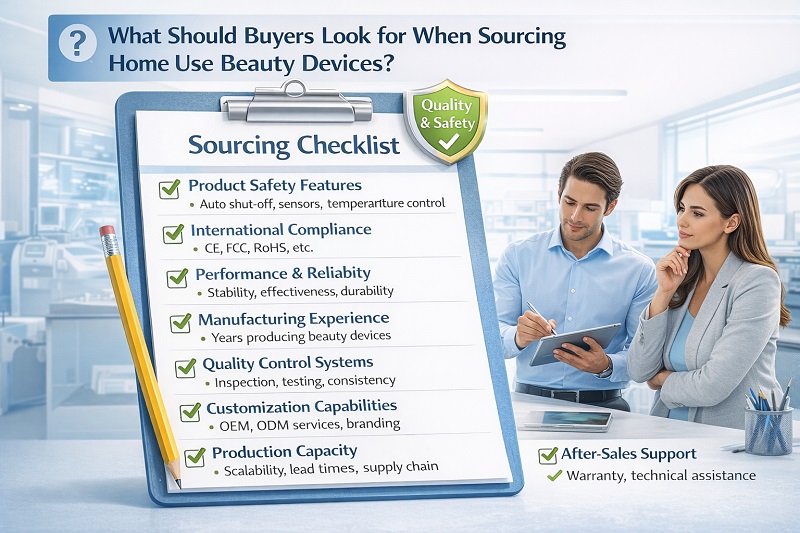
So, what should buyers look for when sourcing home use beauty devices? This article provides a comprehensive guide covering product performance, safety, compliance, manufacturing capabilities, and long-term partnership considerations to help buyers make informed sourcing decisions.
Understanding the Home Use Beauty Device Market
Before sourcing begins, buyers must understand the nature of the home use beauty device market. Unlike professional salon equipment, home devices are designed for non-professional users and must balance effectiveness with a high level of safety.
Popular categories include facial cleansing devices, RF skin tightening tools, EMS facial toning devices, IPL hair removal systems, LED light therapy devices, and multi-function beauty devices. Each category has unique technical requirements and user expectations.
Successful sourcing starts with clarity about target markets, consumer needs, price positioning, and regulatory environments.
Product Safety: The First Priority for Buyers
Safety is the most critical factor when sourcing home use beauty devices. Since these products are used without professional supervision, any safety issue can result in brand damage, recalls, or legal consequences.
Buyers should evaluate whether devices include built-in safety mechanisms such as temperature control, energy output limits, automatic shut-off features, and skin contact sensors. Materials used for skin-contact areas must be suitable for prolonged use and resistant to irritation.
A reliable manufacturer should be able to explain how safety is engineered into both hardware and software design, rather than treating safety as an afterthought.
Compliance with International Regulations and Standards
Regulatory compliance is non-negotiable when sourcing home use beauty devices. Different markets impose different requirements, and buyers must ensure products meet all applicable standards before entering the market.
Common certifications include CE for Europe, FCC for the United States, and RoHS for environmental compliance. Some markets may require additional testing or documentation depending on device functionality.
Buyers should work with manufacturers who understand global compliance processes and can support testing, documentation, and certification timelines. This experience reduces delays and minimizes regulatory risks.
Device Performance and Technology Reliability
While safety is essential, performance ultimately determines customer satisfaction. Buyers should evaluate whether a beauty device delivers consistent and realistic results aligned with its claims.
Key considerations include energy stability, treatment effectiveness, and long-term durability. Devices should maintain consistent output throughout their lifespan, not just during initial testing.
Manufacturers with strong engineering and testing capabilities are better positioned to ensure stable performance across large production volumes.
Manufacturing Experience and Technical Expertise
Not all manufacturers are equal in terms of technical capability. Buyers should assess how long a factory has been producing beauty devices and whether it specializes in home use products.
Experienced manufacturers understand the nuances of consumer safety, ergonomic design, and user behavior. They are also more likely to have established production workflows, trained staff, and quality control systems.
Technical expertise is especially important for advanced technologies such as RF, EMS, IPL, and LED, which require precise control and integration.
Quality Control Systems and Consistency
Consistent quality is essential for building a reputable beauty brand. Buyers should evaluate a manufacturer’s quality control processes at every stage of production.
This includes incoming material inspection, in-process quality checks, functional testing, and final inspection. Some manufacturers also conduct aging tests to identify potential long-term issues.
A transparent quality system demonstrates professionalism and reduces the risk of defects, returns, and customer complaints.
OEM and ODM Capabilities for Customization
Most buyers seek some level of customization when sourcing home use beauty devices. OEM and ODM capabilities determine how flexible a manufacturer can be in meeting these needs.
Customization may involve industrial design, surface finishes, color options, logo application, packaging, and user manuals. More advanced projects may include software customization or app integration.
Buyers should confirm whether customization is handled in-house or outsourced, as this affects timelines, cost control, and communication efficiency.
Product Design and User Experience
Design plays a crucial role in the success of home use beauty devices. Consumers expect products that are intuitive, comfortable, and visually appealing.
Buyers should evaluate ergonomic design, button layout, weight balance, and ease of use. Clear instructions and simple operation are especially important for first-time users.
Manufacturers that understand user experience design are better equipped to help brands create products that stand out in competitive markets.
Scalability and Production Capacity
Scalability is often overlooked during initial sourcing but becomes critical as demand grows. Buyers should assess whether a manufacturer can handle both small trial orders and large-scale production.
A scalable supplier allows brands to test the market, adjust forecasts, and increase volume without switching factories. This continuity improves efficiency and reduces operational risk.
Production capacity, lead times, and supply chain stability should all be evaluated during supplier selection.
Supply Chain Integration and Component Sourcing
Home use beauty devices rely on multiple components, including electronics, batteries, motors, and housing materials. A well-integrated supply chain ensures cost efficiency and production stability.
Manufacturers with strong supplier networks can better manage component availability and price fluctuations. This integration also enables faster response to design changes or market demands.
Buyers benefit from suppliers who can control key aspects of the supply chain rather than relying heavily on third parties.
Communication and Project Management
Effective communication is essential for successful sourcing. Buyers should assess how responsive and transparent a manufacturer is during initial discussions.
Clear communication regarding specifications, timelines, and potential risks builds trust and prevents misunderstandings. Dedicated project management teams further improve coordination and accountability.
Manufacturers experienced in working with international clients typically offer smoother communication and more reliable execution.
Intellectual Property Protection and Confidentiality
Intellectual property protection is a common concern for buyers sourcing beauty devices. Reputable manufacturers understand the importance of confidentiality and are willing to sign NDAs.
Buyers should also consider whether the manufacturer has internal controls to protect designs, software, and branding assets. Trustworthy partners treat IP protection as part of long-term collaboration.
Proper documentation and clear agreements reduce risk and support sustainable partnerships.
After-Sales Support and Long-Term Cooperation
Sourcing does not end after production and shipment. After-sales support is critical for addressing technical issues, warranty claims, and customer feedback.
Manufacturers that offer clear after-sales processes and technical support demonstrate commitment to long-term partnerships. This support becomes especially valuable as products reach wider markets.
Buyers should view sourcing as a long-term relationship rather than a one-time transaction.
Price Evaluation: Looking Beyond the Lowest Quote
While pricing is important, the lowest quote does not always represent the best value. Buyers should consider total cost, including quality, compliance, reliability, and support.
A slightly higher unit cost may result in fewer defects, stronger brand reputation, and lower long-term risk. Evaluating price in context leads to better sourcing decisions.
Experienced buyers focus on value and sustainability rather than short-term savings.
Building a Strategic Sourcing Partnership
The most successful beauty brands treat sourcing as a strategic partnership. By working closely with manufacturers who understand their goals, brands can innovate faster and respond more effectively to market changes.
A strong sourcing partner contributes not only production capability but also technical insight and market experience. This collaboration creates competitive advantage in a crowded market.
Choosing the right manufacturer is therefore a strategic decision with long-term implications.
Conclusion: Making Smarter Sourcing Decisions
Sourcing home use beauty devices requires careful evaluation across multiple dimensions, including safety, compliance, performance, quality, and partnership potential.
By focusing on these key factors, buyers can reduce risk, enhance product competitiveness, and build sustainable beauty brands. In a fast-growing and highly competitive industry, informed sourcing decisions are a critical foundation for success.
Understanding what to look for—and choosing the right manufacturing partner—ultimately determines whether a home use beauty device succeeds in the global market.